 (888)TO-BUENO
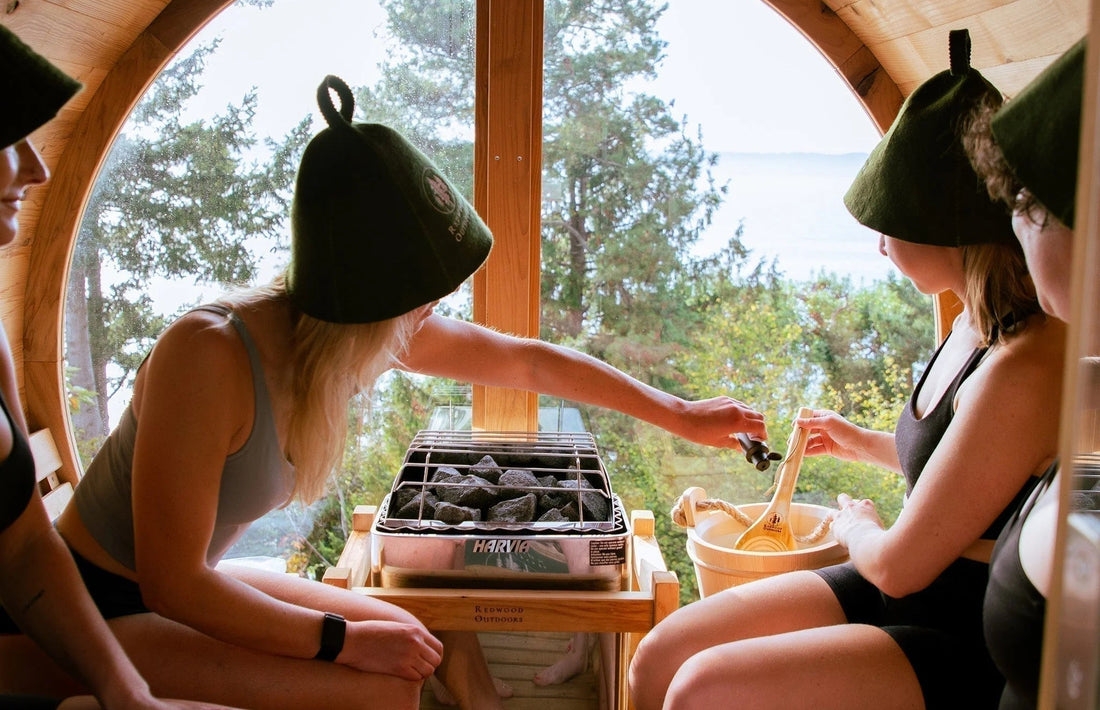
Today, a sauna may look like a beautifully crafted wooden retreat placed beside a pool, hot tub, or garden. Its earliest forms, however, were far simpler.
Long before the sauna became a symbol of relaxation and modern wellness, it was closely connected to survival, shelter, cleanliness, family life, and community. Its story begins thousands of years ago in the cold landscapes of Northern Europe and eventually crosses the Atlantic with Finnish immigrants, finding a lasting place in American culture.
Understanding where the sauna came from also helps explain why it remains so meaningful today. It was never simply a heated room. It was a place where people could escape the cold, wash, rest, gather, recover, and reconnect.
What Does the Word “Sauna” Mean?
“Sauna” is a Finnish word that refers both to the bathing practice and to the dedicated building or room in which it takes place.
It is one of the relatively few Finnish words that has entered everyday English almost unchanged. Although the word is now internationally recognized, its ancient linguistic origins are not entirely certain. Some interpretations connect it to early words associated with small shelters, cabins, pits, or piles of heated stones.
What defines a traditional Finnish sauna is not simply a hot room. At its heart is the kiuas, the sauna heater or stove covered with stones. When water is poured onto the heated stones, it creates löyly—the wave of steam, heat, and humidity that spreads through the room.
In Finnish culture, löyly is considered the essential spirit of the sauna experience. Without heated stones and the possibility of creating löyly, a heated room may not feel like a true Finnish sauna at all.

Picture from Estonian sauna society
The Earliest Saunas Were Dug Into the Earth
The exact moment when the first sauna was created is impossible to identify. There is no written account of the first person who heated stones and discovered how the rising warmth and steam could transform an enclosed space.
However, historians believe sauna culture may stretch back thousands of years. Some estimates place its earliest forms around 10,000 years ago.
These primitive saunas were not wooden cabins. They were likely pits or dugouts built into the ground or into the side of a slope. Stones were placed at the bottom and heated by a fire. The space could then be covered with materials such as earth, peat, branches, animal skins, or other available insulation to hold in the warmth.
In the severe northern climate, these early structures may have served several purposes. They offered shelter from winter weather, provided a place to warm the body, and could also be used for washing and rest.
Once the fire had heated the stones, water could be added to generate steam. The combination of the earth surrounding the shelter, the retained heat of the stones, and the rising steam made the space warmer than the outside environment.
The earliest sauna was therefore not designed as a luxury. It was a practical response to cold weather and a basic human need for warmth, protection, cleanliness, and recovery.
From an Earth Pit to the Smoke Sauna
As building techniques developed, the sauna gradually moved above ground.
The simple dugout evolved into a small wooden structure, usually built from logs. Early Finnish saunas did not have chimneys. A fire burned beneath or beside a large pile of stones, filling the room with smoke while the stones absorbed the heat.
After the room and stones had become hot enough, the fire was allowed to die down and the smoke was released through a door or opening. The remaining heat could last for hours.
This type of sauna became known as the savusauna, or smoke sauna.
The darkened walls, the scent of wood smoke, and the soft heat released by the large mass of stones created a distinctive experience. Smoke saunas still exist in Finland today and are considered by many sauna enthusiasts to offer one of the most traditional forms of löyly.
Over time, chimney-equipped wood-burning stoves and later electric heaters made saunas easier, cleaner, and faster to heat. Yet the basic principle remained unchanged: an enclosed wooden space, heated stones, water, steam, and time set aside from everyday life.

More Than a Place to Keep Warm
As Finnish communities developed, the sauna became much more than a winter shelter.
It was one of the cleanest and warmest spaces available in a traditional household. Water could be heated there, the room could be washed, and the high temperature helped keep the space hygienic.
For this reason, the sauna became part of many important moments in family life. People washed there, recovered after physical labor, prepared food, treated minor ailments, and gathered with relatives and neighbors. For generations, Finnish women also gave birth in saunas.
When a family established a new home, the sauna was often among the first structures built. In some cases, the family temporarily lived in it while the main house was being completed.
The sauna was therefore not an optional addition to the home. It was one of its foundations.
This deep cultural importance continues today. In 2020, sauna culture in Finland was added to UNESCO’s Representative List of the Intangible Cultural Heritage of Humanity. The recognition applies not only to sauna buildings, but also to the rituals, knowledge, traditions, conversations, and shared experiences surrounding them.

Heat Traditions in North America Before European Arrival
Although Finnish immigrants played a major role in introducing Finnish sauna traditions to the United States, they were not the first people in North America to use intentional heat and steam.
Indigenous peoples across the continent had—and continue to have—their own ceremonial sweat lodge traditions. These practices are connected to purification, prayer, healing, reflection, spirituality, and community.
They should not be treated simply as early American versions of the Finnish sauna. Sweat lodges belong to distinct Indigenous cultures and carry their own meanings, rules, and sacred traditions.
However, the existence of heat-based practices in many different cultures demonstrates something important: humans have repeatedly discovered that warmth, steam, enclosure, silence, and shared ritual can create a powerful setting for physical and emotional renewal.

Finnish Settlers Bring Sauna Culture to America
The earliest documented Finnish settlers arrived in the area that would become the United States during the 17th century.
In 1638, Finnish settlers came to North America as part of the New Sweden colony along the Delaware River. They brought with them practical log-building techniques that were well suited to frontier conditions and cold climates.
These construction traditions helped influence the development of the American log cabin. They also made it possible for settlers to recreate the simple wooden sauna buildings they had known in Finland.
Larger waves of Finnish immigration followed during the late 19th and early 20th centuries. Many immigrants settled in northern regions such as Michigan, Minnesota, Wisconsin, and Alaska, where the forests, lakes, long winters, and rural landscapes felt familiar.
Between 1890 and 1914 alone, approximately 200,000 Finns immigrated to the United States, with many establishing communities in Michigan and the surrounding Great Lakes region.
They brought the sauna with them not as a fashionable wellness product, but as part of their normal way of life.
The Sauna as a Piece of Home
For Finnish immigrants, building a sauna helped preserve a connection to the country and culture they had left behind.
On farms, homesteads, and in mining communities, the sauna served as a place to wash after difficult physical work. It also became a setting for social gatherings, family traditions, rest, and conversation.
Finnish-American clubs and community centers frequently included shared saunas. These spaces helped immigrants maintain their language, customs, relationships, and cultural identity while adapting to life in the United States.
The sauna was a small piece of Finland rebuilt on American soil.
Its warmth was practical, but it was also emotional. The familiar process of heating the stones, creating löyly, and sitting together offered continuity in a new and unfamiliar environment.
From Everyday Necessity to Modern Wellness
As indoor plumbing, central heating, and modern bathrooms became standard, most American families no longer needed a sauna for washing or basic warmth.
Yet sauna culture did not disappear.
Instead, its role changed. What had once been essential for daily survival and hygiene became an intentional space for relaxation, recovery, quiet, and social connection.
Modern outdoor saunas still reflect many of the principles found in their ancient predecessors:
- An enclosed space that preserves warmth
- Natural materials that create a calm environment
- Heated stones that store and release heat
- Water used to create steam and löyly
- A clear separation from everyday distractions
- Time shared with family, friends, or oneself
The technology has evolved, but the human experience remains surprisingly similar.

Why Own a Sauna at Home?
A public sauna, gym, hotel, or wellness center can provide an occasional experience. A sauna at home makes it possible to turn that experience into a regular personal ritual.
Use It Whenever It Fits Your Schedule
A home sauna is available without reservations, travel, opening hours, or crowded changing rooms.
It can become part of an early morning routine, an evening wind-down, a weekend gathering, or a quiet break after exercise or outdoor activity.
The easier the sauna is to access, the easier it becomes to use consistently.
Create a Private Space Without Distractions
Traditional sauna culture is built around slowing down.
A home sauna provides a dedicated space where phones, television, work notifications, and other distractions can be left outside. It gives you an opportunity to sit quietly, focus on your breathing, talk with your partner, or simply spend time without needing to do anything else.
In a world where people are constantly connected to technology, the sauna can become one of the few genuinely screen-free spaces in the home.
Control the Entire Experience
At home, you can choose the temperature, steam level, lighting, music, length of the session, and the people you share it with.
Some users prefer strong heat and generous löyly. Others enjoy a gentler temperature and a quieter session. A private sauna allows the experience to be adapted to personal comfort rather than public expectations.
Make Wellness Part of Everyday Life
A spa visit usually requires planning, travel, and additional expense. A backyard sauna places the experience only a few steps from the house.
Instead of saving relaxation for a vacation or occasional wellness weekend, you can create a routine that fits into normal life.
Use Your Backyard Throughout the Year
An outdoor sauna gives the backyard a purpose beyond warm summer days.
Cool autumn evenings, snowy winters, early spring mornings, and summer nights can all offer a different atmosphere. The contrast between the outdoor temperature and the warmth of the sauna can make the experience especially memorable during colder months.
Create a Place for Connection
Although a sauna can be deeply personal, it has always been a social space as well.
Families can sit together without the usual distractions. Couples can create a shared evening ritual. Friends can gather in a more peaceful setting than a typical party or entertainment space.
The sauna encourages conversation, but it is also one of the rare places where silence feels completely natural.
Why Pair a Sauna With a Hot Tub?
A sauna and a hot tub both use warmth, but they create very different experiences.
A sauna surrounds the body with heated air and steam. The experience is focused, quiet, and immersive.
A hot tub surrounds the body with warm water, buoyancy, comfortable seating, and massage jets. It is often gentler, more social, and suitable for a longer period of relaxed sitting.
Owning both gives you more ways to enjoy your backyard and allows you to choose the experience that fits the moment.
Two Different Forms of Relaxation
Some evenings may call for the stillness and intensity of the sauna. On other days, the warm water and hydrotherapy jets of a hot tub may feel more inviting.
The sauna is ideal when you want to step into a dedicated ritual and disconnect from the outside world. The hot tub is ideal when you want to sit back, talk, enjoy the outdoors, or relax for a longer period.
Together, they create a more versatile wellness space than either product alone.
A Natural Sequence for a Slower Evening
A sauna session can become the beginning of an intentional evening at home.
After leaving the sauna, take time to cool down, rest, and drink water. Once you feel comfortable, you may continue the evening with a gentle hot tub soak.
Because both environments expose the body to heat, they should be used thoughtfully. Avoid moving immediately from a prolonged, high-temperature sauna session into an extremely hot hot tub. Cooling down and rehydrating between the two experiences helps keep the routine comfortable.
The goal is not to tolerate as much heat as possible. The goal is to feel relaxed and refreshed.
A Better Space for Family and Friends
The sauna and hot tub also support different kinds of social experiences.
Inside the sauna, conversation is usually quieter and more focused. In the hot tub, the atmosphere can be more informal and open.
Guests can move between relaxation, cooling down, outdoor seating, and a comfortable soak, creating the feeling of a private spa without leaving home.
A Complete Backyard Retreat
A hot tub can transform a backyard into a place for warm-water relaxation. Adding a sauna gives that space another dimension.
Together, they create a complete environment built around heat, water, nature, privacy, and personal choice.
Instead of arranging a trip to a resort or spa whenever you need a break, you can step outside and use a space designed around your own lifestyle.
Choosing the Right Outdoor Sauna
The best sauna depends on the size of your outdoor area, the number of people who will normally use it, and the type of experience you want to create.
A compact two-person sauna can provide a private retreat for an individual or couple. Four-person models offer additional comfort without requiring a large backyard. Six- and eight-person outdoor saunas provide room for families, guests, and social gatherings.
The design also affects the character of the space.
Barrel saunas offer a traditional outdoor appearance and a cozy interior. Cabin and cube-style saunas provide a more spacious architectural feel and may offer more flexible seating arrangements.
Heater selection is equally important. Traditional manual heaters provide straightforward operation, while Wi-Fi-enabled heaters can allow the sauna to be prepared in advance.
BuenoSpa offers a selection of Redwood Outdoors saunas in different capacities and styles, including compact Duo models, Cabin saunas, Summit saunas, Barrel saunas, and larger Garden saunas. The collection includes traditional Harvia KIP heaters as well as Harvia Spirit Wi-Fi heater options.
Explore outdoor saunas at BuenoSpa
Continue the Story in Your Own Backyard
The sauna has traveled a remarkable path.
It began as a simple earth-covered shelter built around fire and heated stones. It developed into the Finnish smoke sauna, became an essential part of family and community life, crossed the Atlantic with immigrants, and eventually found a new role in modern American homes.
Yet its central purpose has remained remarkably consistent.
A sauna creates a warm space apart from the outside world. It gives people time to wash, rest, reflect, recover, talk, and reconnect.
Modern materials, electric heaters, Wi-Fi controls, and contemporary designs make the experience more convenient, but the ritual remains rooted in something ancient and deeply human.
Paired with a hot tub, an outdoor sauna can become part of a complete backyard wellness environment—one that offers privacy, comfort, shared experiences, and a reason to step away from everyday distractions throughout the year.
Sources and Further Reading
This article was inspired by Redwood Outdoors’ original feature and supplemented with information from Finnish cultural, historical, and sauna organizations.
Original Article
Finnish Sources
-
ThisisFINLAND: Finnish Architect Sami Rintala Tells Us How Saunas Got Hotter Than Ever
Background information about the earliest known forms of sauna, including pits dug into the ground with stones heated by fire, and the estimated ancient origins of sauna culture. -
ThisisFINLAND: Bare Facts of the Sauna in Finland
An introduction to the historical and cultural role of the sauna in Finnish everyday life, including washing, warmth, childbirth, and family traditions. -
Finnish Heritage Agency: Sauna Culture in Finland
Official Finnish information about sauna culture and its recognition as part of the Intangible Cultural Heritage of Humanity. -
Finnish Heritage Agency: The Sauna Culture in Finland Has Been Inscribed on UNESCO’s List of Intangible Cultural Heritage
Further information about the cultural traditions, practices, and knowledge connected with Finnish sauna culture. -
Finnish Ministry of Education and Culture: Finland’s Sauna Culture Inscribed on UNESCO Intangible Cultural Heritage List
The Finnish government’s announcement concerning the international recognition of sauna culture. -
Finnish Sauna Society: The Finnish Sauna Society
Expert information about Finnish sauna traditions, sauna practices, heaters, smoke saunas, health research, and sauna culture. -
Finnish Sauna Society: A Child in the Sauna
Historical information about the sauna as a clean, warm space used for childbirth, bathing, and family life.
International Cultural Source
-
UNESCO: Sauna Culture in Finland
UNESCO’s official description of Finnish sauna culture, including the meaning of löyly and the sauna’s role in cleansing the body and mind, creating inner peace, and bringing people together.